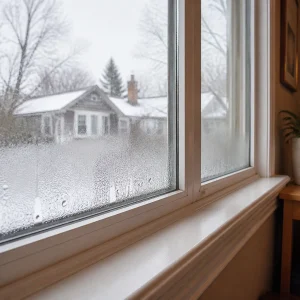
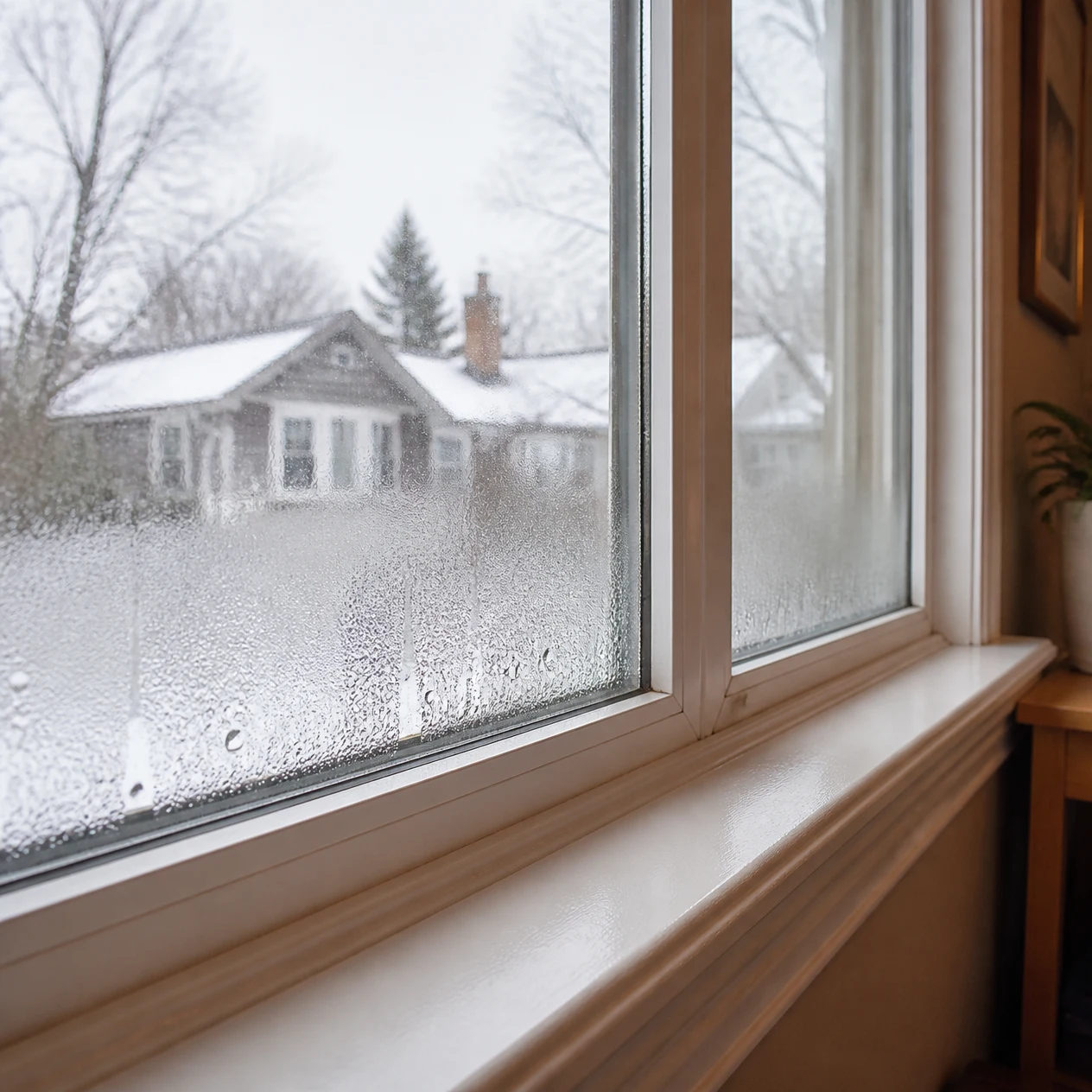
Window condensation in Calgary shows up the same way every year: the first real cold snap arrives, the temperature drops below minus 20, and you wake up to water beading on the bottom of your windows, frost creeping up the glass, and damp sills that never quite dry out. Wiping it away works for a morning or two, but condensation that keeps coming back is your house telling you something about humidity and airflow, and ignoring it through a full Calgary winter can lead to stained sills, peeling paint, rotted wood and mould.
The good news is that condensation is one of the more predictable problems in a home. Once you understand why it forms, most of the fixes are simple, inexpensive and well within reach of any homeowner.
Why Windows Sweat When the Temperature Drops
Warm indoor air holds moisture. When that air touches a surface colder than its dew point, the moisture turns back into water. In winter, your windows are almost always the coldest surface in the room, so they are where condensation appears first.
The colder it gets outside, the colder the glass gets, and the less humidity your home can hold before the windows start to sweat. A humidity level that causes no trouble at minus 5 can leave water pooling on your sills at minus 25. That is why condensation often seems to appear suddenly during an Arctic outbreak, even though nothing inside the house has changed.
Calgary adds its own twist. Chinooks can swing the temperature by 20 degrees or more in a few hours, and the house rarely adjusts as quickly as the weather. Frost that built up on the glass during a cold stretch melts all at once when the chinook arrives, sending a surprising amount of water onto sills and into window tracks.
What Indoor Humidity Should Be in a Calgary Winter
Calgary’s outdoor air is dry, so many homeowners assume their indoor air must be dry too. Often it is not. Cooking, showers, laundry, plants, pets and simply breathing add litres of moisture to a home every day, and modern homes are built tightly enough that much of it stays inside.
A small digital hygrometer is the most useful tool for this problem, and they are widely available at hardware stores. As a general guide, aim for roughly 35 to 40 percent relative humidity when it is around minus 10 outside, and closer to 25 to 30 percent when it drops to minus 25 or colder. If your windows are sweating, your reading is almost certainly above the range for that day’s temperature.
Check the reading in a few rooms. Bedrooms with doors closed overnight and basements tend to run higher than the main floor, and those are usually the windows that give you the most trouble.
Common Causes of Window Condensation in Calgary Homes
A furnace humidifier set too high. Many Calgary homes have a humidifier mounted on the furnace, and it is easy to forget it is there. If the dial was set high during a dry spell in October and never adjusted, it can push far too much moisture into the house once the deep cold arrives. Turn it down as temperatures fall, or shut it off completely during a cold snap.
Bathroom and kitchen fans that are not doing their job. A bathroom fan should run during every shower and for at least 20 minutes afterward. If it cannot hold a square of toilet paper against the grille, it is not moving enough air, often because of dust or a disconnected duct. The same applies to a range hood, which should vent outdoors rather than simply recirculate.
An HRV that is off, unbalanced or dirty. Most newer Calgary homes have a heat recovery ventilator that exchanges stale, humid indoor air for fresh outdoor air. Homeowners often turn them down or off because they feel they are making the house cold. Without it, moisture builds up quickly. HRV filters and cores also need regular cleaning, and the exterior intake hood can become blocked by snow or frost.
Window coverings that trap cold air. Heavy blinds and curtains kept closed against the glass create a pocket of cold, still air that never mixes with the warm room. Condensation forms on the glass behind them even when the rest of the house is fine. Opening coverings during the day and keeping a little space between the fabric and the window helps more than most people expect.
Aging windows and failed seals. Older single pane or aluminum framed windows run much colder than modern units and will sweat at lower humidity levels. If you see fog or moisture between the panes of a double or triple glazed unit, the seal has failed. That cannot be wiped away or fixed with a humidity adjustment; the sealed unit will need to be replaced.
Practical Steps to Reduce Condensation This Winter
Start with the easy adjustments. Buy a hygrometer, check your readings, and turn down the furnace humidifier if you have one. Run bathroom fans during and after every shower, use the range hood every time you cook on the stovetop, and make sure your dryer vents to the outside with a clean, connected duct.
Next, look at airflow. Keep supply registers below windows open and unblocked by furniture, and leave furnace fan settings on continuous or circulate if your system allows it. Moving air across the glass warms it slightly and reduces the chance of moisture settling.
If you have an HRV, make sure it is running, clean the filters, and check that the outdoor hoods are clear of snow and frost after a storm. If it has not been balanced or serviced in several years, it is worth having a qualified technician look at it.
Finally, keep an eye on the window tracks and sills. Wipe away standing water each morning during cold snaps, and make sure the weep holes at the bottom of sliding and casement window frames are clear so water can drain outside instead of soaking into the drywall below.
When Condensation Points to a Bigger Problem
Occasional fog on the lower edge of the glass on the coldest mornings of the year is normal. Water that runs down onto the sill every day, frost that builds up thick enough to scrape, or condensation that lingers into the afternoon is not.
Watch for black spotting on caulking, sills or the drywall returns around the window, paint that is bubbling or peeling, and soft or darkened wood on the frame. These are signs that moisture has been sitting long enough to cause damage. If several windows across the house are affected, the issue is usually whole home humidity or ventilation rather than the windows themselves.
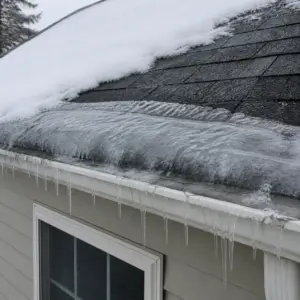
Condensation on windows can also be a hint about what is happening in places you cannot see. If the house is holding too much moisture, that same warm, damp air can find its way into the attic through gaps around light fixtures and the attic hatch, where it can lead to frost buildup on the underside of the roof. Many of the same habits that protect your windows also help prevent problems like the ones covered in our post on frozen pipes in Calgary, where cold surfaces and trapped moisture cause most of the trouble.
How Squad Life Helps Calgary and Foothills Homeowners
Window condensation is rarely just a window problem. It is usually the visible end of a chain that runs through your humidifier, your fans, your HRV and your attic. Checking each of those pieces is part of every Squad Life visit, alongside the rest of the seasonal maintenance that keeps homes in Calgary, Okotoks and the Foothills running well through the winter.
During a Home Health Check, we take humidity readings, confirm your bathroom fans and range hood are venting properly, inspect HRV filters and outdoor hoods, and look for early signs of moisture damage around windows and in the attic. Anything we find is logged in your member portal with photos, so you can see what needs attention now and what can wait.
If your windows are already sweating this winter, or you simply want to know your home is ready for the coldest weeks ahead, book a Home Health Check and let us take a look.