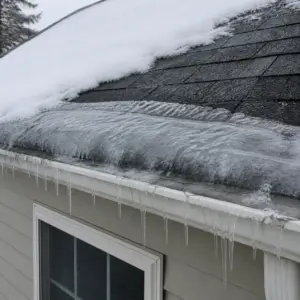
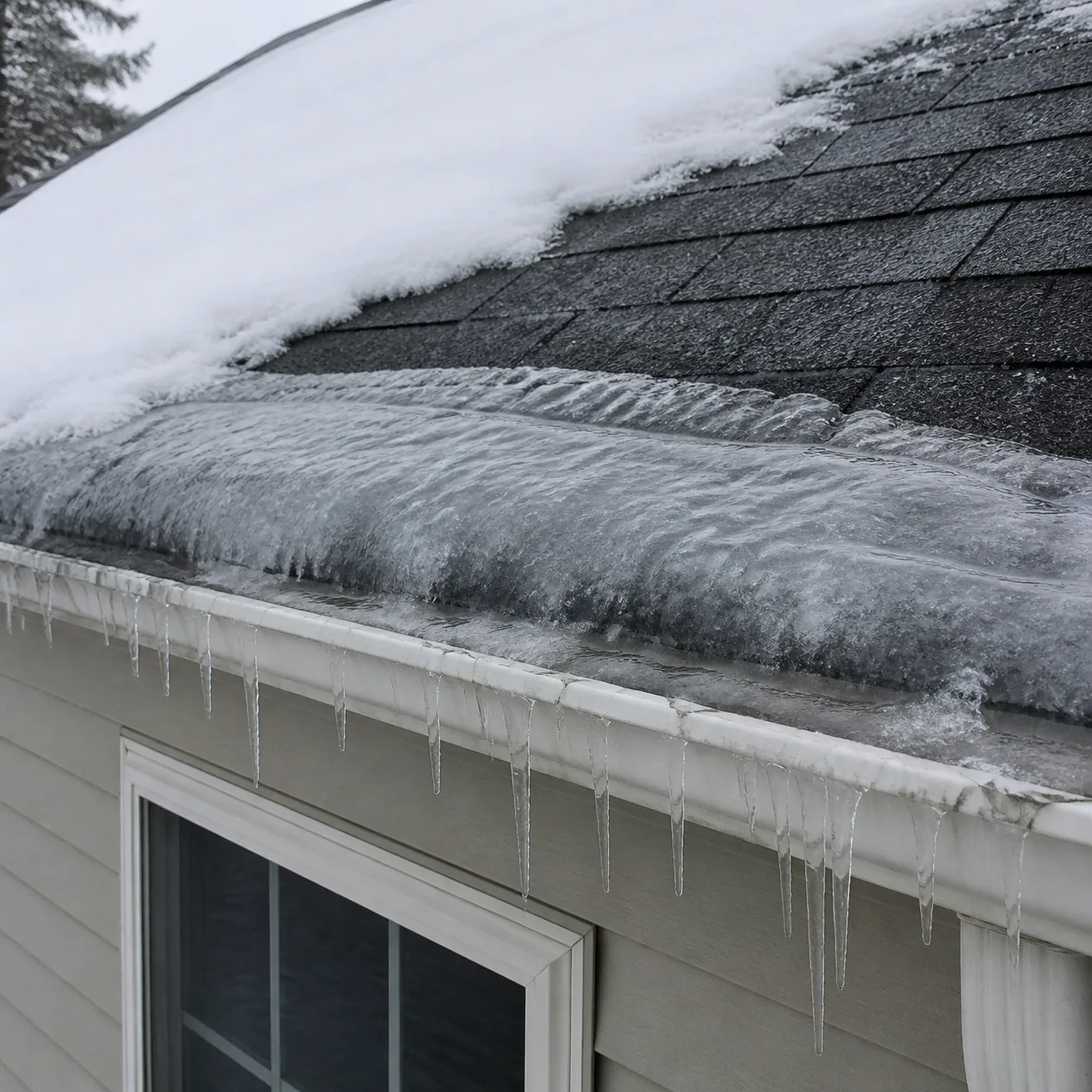
Ice dams in Calgary tend to show up right after a chinook. The warm wind melts the snow on your roof in an afternoon, the temperature drops back below freezing that evening, and by morning a ridge of ice has formed along the eaves with a row of icicles hanging off the gutters. It looks harmless. The trouble is what the water behind that ice is doing to your roof, your walls and your ceilings.
Calgary and the Foothills see more freeze and thaw cycles in a single winter than most Canadian cities, and that makes our homes unusually prone to ice damming. The good news is that most ice dams are preventable, and the causes are not hard to find once you know where to look.
What an Ice Dam Actually Is
An ice dam is a ridge of ice that forms along the lower edge of a roof, usually right above the eavestrough. It starts when snow on the upper part of the roof melts and the water runs down the shingles toward the edge. The roof overhang sits outside the heated envelope of the house, so it stays cold, and the meltwater refreezes as soon as it reaches it.
Each melt adds another layer. Over several days the ridge grows thick enough to hold back a pool of water behind it. Shingles are designed to shed water running downhill, not to hold back standing water, so that pool eventually works its way under the shingles, past the underlayment and into the roof deck, the insulation and the drywall below.
The first sign many homeowners notice is a brown stain on the ceiling near an exterior wall, or peeling paint above a window. By the time that appears, water has usually been getting in for a while.
Why Ice Dams in Calgary Are So Common
Most of Canada gets snow that sits on the roof until spring. Calgary gets snow, then a chinook that pushes temperatures well above zero, then a cold snap that drops them back to minus twenty. That pattern can repeat several times between November and March, and every cycle is another chance for meltwater to refreeze at the eaves.
Chinooks are not the only driver. Strong winter sun on south and west facing roofs can melt snow on a calm, cold day, and the water refreezes as soon as it reaches the shaded overhang. Homes in the Foothills, where nights are often colder than in the city, see the same effect.
The other key ingredient is heat from inside the house. If the roof deck is warm enough to melt snow from underneath while the air outside is below freezing, you have the conditions for an ice dam even without a chinook. That heat almost always comes from the attic.
The Real Cause Is Usually in Your Attic
A healthy attic in winter should be close to the outdoor temperature. When warm, moist air from the living space leaks into the attic, it heats the underside of the roof deck and melts the snow above it. The most common leak points are the attic hatch, pot lights, bathroom fan housings, plumbing stacks and gaps around electrical wiring in the top plates of interior walls.
Insulation is the second factor. Many older Calgary homes, and some newer ones, have insulation that has settled, been disturbed by trades, or was never installed to a consistent depth. Thin spots let heat through to the roof deck in patches, which is why some homes get ice dams on one section of the roof and not another.
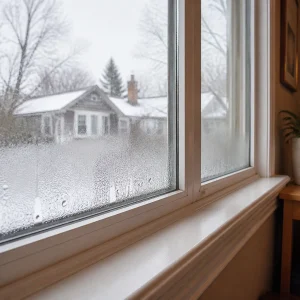
Ventilation is the third. Soffit vents bring cold air in at the eaves and roof or ridge vents let it out at the top, which keeps the roof deck cold and carries moisture away. When soffit vents are blocked by insulation or painted over, the attic gets warm and humid. That same humidity is what causes frost on the underside of the roof sheathing, which melts and drips onto the insulation during a chinook. If you have ever seen water stains on a ceiling with no obvious roof leak, attic condensation is a likely suspect.
Gutters, Downspouts and the Water Problem
Eavestroughs do not cause ice dams, but they can make them worse. Gutters that are still full of leaves and needles from the fall hold water, freeze solid and give the ice a foundation to build on. Downspouts that are frozen or blocked send meltwater over the edge, where it freezes on walkways, steps and the driveway.
Where your downspouts discharge matters too. Extensions that dump water against the foundation can lead to ice buildup that heaves concrete and lets water into the basement during the next thaw. Make sure downspouts direct water at least a metre or two away from the house and onto ground that slopes away from it.
If you have not cleaned your gutters since the leaves came down, a dry day in November is the best time to do it. Our seasonal services include exterior checks like this before the deep cold arrives.
How to Prevent Ice Dams in Calgary Homes
Prevention focuses on keeping the roof deck cold and the water moving. The most effective steps happen inside the attic, not on the roof.
Start by sealing air leaks between the living space and the attic. Weatherstripping the attic hatch is one of the cheapest and most effective fixes in the whole house, and it is one of the items we flag most often. Sealing around pot lights, bath fans and plumbing penetrations makes a measurable difference as well, and it also helps prevent the attic condensation described above.
Next, check insulation depth and coverage. It should be even across the attic floor, with no bare spots and no insulation packed into the soffit area where it blocks airflow. Baffles at the eaves keep a channel open for cold air to move from the soffits up under the roof deck.
Finally, make sure bathroom and kitchen fans vent to the outdoors through a proper roof or wall cap, not into the attic. A bath fan dumping warm, wet air into the attic every morning is a reliable recipe for frost, mould and ice dams.
What to Do If You Already Have an Ice Dam
If an ice dam has formed, avoid chipping at it with a hammer or axe. It does not take much to damage shingles and eavestroughs, and working on an icy roof edge is dangerous. Pulling down large icicles from a ladder carries the same risk.
A roof rake with a long handle lets you clear the bottom metre or so of snow from the ground, which removes the supply of meltwater feeding the dam. Calcium chloride in a sock or ice melt tablets designed for roofs can open a channel through the ice so trapped water can drain. Do not use rock salt, which damages shingles, metal flashing and the plants below.
If you see water coming through a ceiling or wall, catch it, protect the area below, and note where it is. Once things dry out, have the attic checked so the underlying cause gets fixed rather than just the stain. Our post on frozen pipes in Calgary covers other cold weather problems worth checking at the same time.
Catch the Cause Before the Stain Appears
Ice dams are a symptom. The root cause is almost always heat and moisture getting into the attic, combined with blocked ventilation or clogged gutters, and none of that is visible from the street. Most homeowners only find out when a ceiling stain appears in February.
That is exactly the kind of problem a regular Home Health Check is designed to catch. At Squad Life, we look at attic hatch seals, insulation coverage, signs of attic frost and condensation, bath fan venting, gutters and downspout discharge as part of every whole home visit across Calgary, Okotoks and the Foothills. Anything we find is logged in your member portal with photos, so you can see what needs attention and plan for it before it becomes a repair.
If you want to know how your home is set up for the rest of this winter, book a Home Health Check and we will take a look from the attic to the downspouts.